-

How to write a narrative CV
This document should strongly demonstrate your capability as well as the feasibility of your proposed work.
-

Universities, research granting agencies left out of federal budget 2023
Leaders and advocates in the university sector decry the latest federal budget as a missed opportunity to support early-career researchers and to heed the recommendations of the Advisory Panel on the Federal Research Support System.
-

Researchers decry a lack of clarity under national security risk assessments
Concern rises about potential research chill as new rules are extended across federal research-funding agencies.
-

Sarah Ruediger joins the Black Hole team!
The neuroscientist is gearing up to cover topics from open, team-based science to putting EDI to work in the field.
-
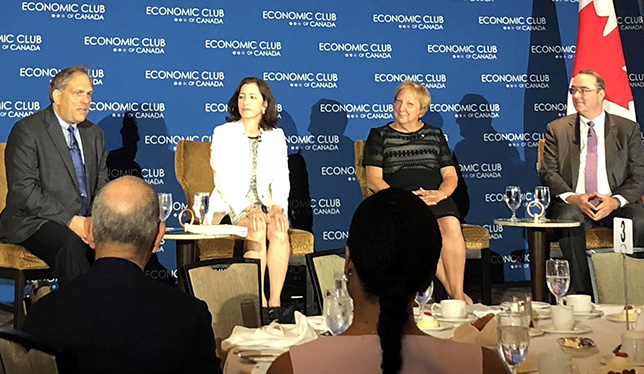
How curiosity-driven science interplays with innovation in Canada’s economy
An expert panel discussed shifting dynamics between the academy and industry in driving economic development in Canada.
-

The arts and sciences: branches from the same tree
Universities can create intentional, integrative learning opportunities without disrupting the rigour of academic disciplines.
-

Scientists making science better – an eLife experiment
The culture of scientific research desperately needs a makeover. Enter the eLife Ambassador program.
-

A map to the federal Post-Secondary Institutions Strategic Investment Fund
As SIF-funded projects wind down, a look at where the funding was distributed by project, institution and province.
-

The Canada Research Coordinating Committee gets into gear
An interview with the committee’s inaugural chair, SSHRC president Ted Hewitt.
-

Why some research areas appear relatively “over-funded”
Public perception of which cancers get research funding differs greatly from what actually gets funded. Here’s why.
-

Limiting grants to well-funded labs
While no one is arguing for funding failure, the challenge is how we define “success.”
-

The implication of the Hatch-Waxman Act for universities
Among the most interesting implications is the recognition that universities are not exempt from patent infringement for basic research.
-

Canada excels in science, but not so much in innovation
After five decades of telling ourselves the same story, can we start asking different questions about innovation?
-

Is NSERC turning the ship around?
I can happily report that something has indeed changed at NSERC and the number of postdoctoral fellowships being awarded is definitely recovering.