Committee urges penalties, random audits to crack down on foreign student visa fraud
Lax oversight, followed by a bungled foreign student permit cap, have wreaked damage on institutes of higher education, a parliamentary committee report concludes.
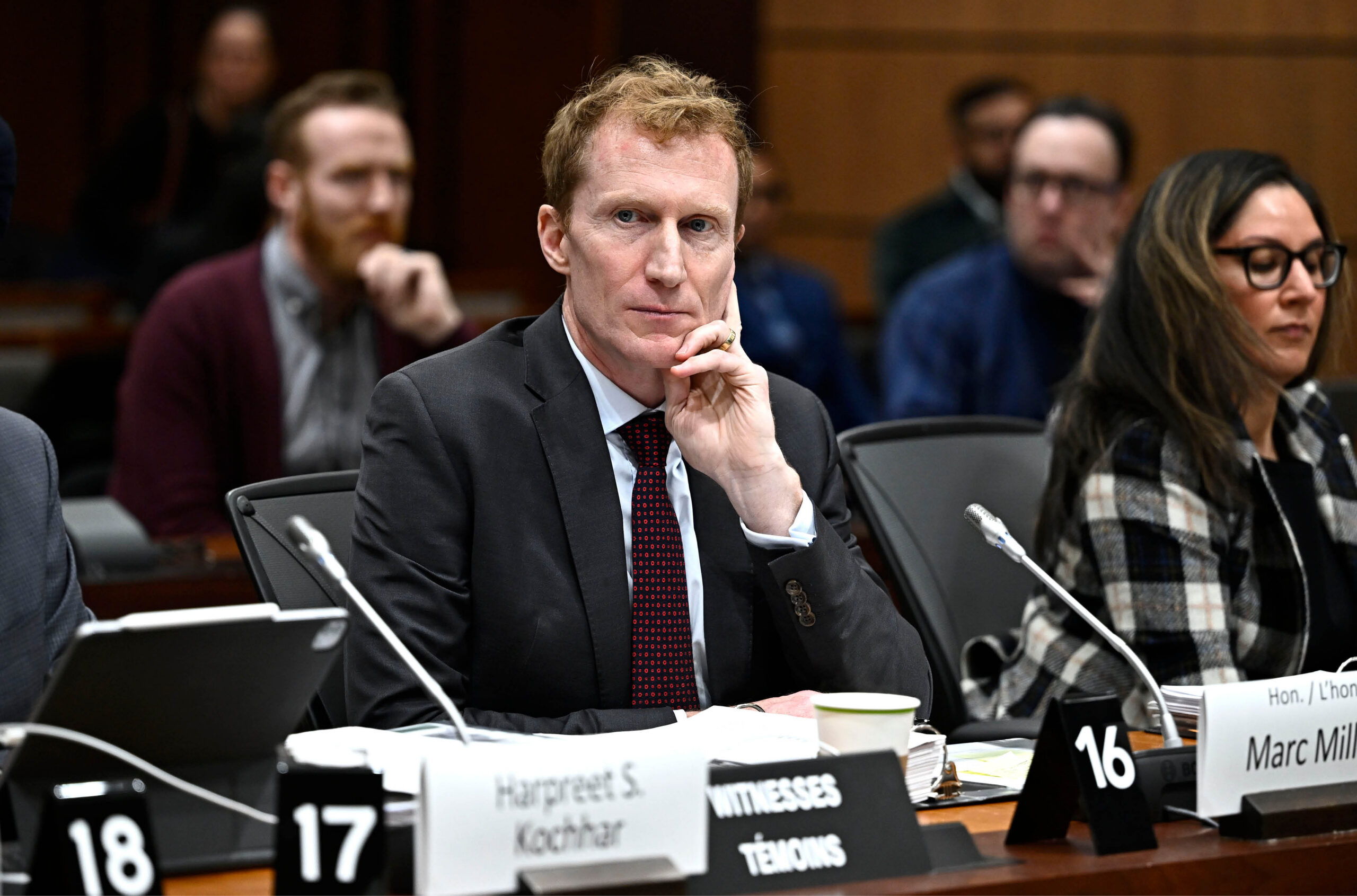
The Canadian government must crack down on fraud by international students and introduce clear penalties for universities and colleges “issuing misleading documents,” a House of Commons committee recommends.
In a report released yesterday, the Standing Committee on Citizenship and Immigration painted a picture of an immigration department that has failed to properly consult with provinces and territories and bungled the implementation of the study permit cap since it was established in Jan. 2024.
Canada hosted one million international students in 2023. According to the report, international education contributed $38.6 billion to the country’s GDP prior to the cap.
The following year, amid evidence of fraud and abuse, then Immigration, Refugees and Citizenship Canada Minister Marc Miller abruptly implemented a limit on the number of study permits, stating that some schools were running the educational equivalent of “puppy mills.”
The committee’s report comes in the wake of last month’s investigation by Auditor General Karen Hogan, which criticized the way the department implemented the study permit cap and its failure to investigate possible fraud.
Committee urges random audits for DLIs
One of the key recommendations of the House of Commons committee study is that the department should investigate every alleged case of international study permit fraud. It is asking for a report on 153,324 individuals who received study permits but may not have been attending classes.
However, the department is struggling to look into even a small number of these cases. The auditor general pointed out that IRCC only had the resources to probe one per cent of the identified problems. Often, officials would drop an inquiry if a student failed to respond to requests for more information.
The Commons committee is calling on the department to ensure that anyone who enters Canada on a fraudulent basis is not issued a study permit extension.
Read also: No more ‘soft touch’ on student visa fraud, IRCC vows
The report urges the federal government to conduct random audits of the 1,500 Designated Learning Institutions — universities, colleges and other schools— to ensure that students are in class and documents are in order. The committee argues that penalties should be spelled out for DLIs that fail to comply with the rules.
In her report, the auditor general noted that the vast majority of DLIs filed the required enrolment reports. However, about 50 institutions failed to do so — and they hosted 10,000 international students.
Under the International Student Program, the federal government issues study permits while the provinces and territories are responsible for educational institutions. During the years prior to the cap, a number of schools, especially colleges in Ontario, enrolled huge numbers of international students in a bid to meet budget shortfalls.
Commented the Commons committee: “Although education and the regulation of learning institutions fall under provincial and territorial jurisdiction, the federal government was responsible for issuing an unsustainable number of study permits and allowing the system to be abused.”
Study permit cap bungled
In announcing the 2024 study permit cap, Minister Miller argued that international students were squeezing out Canadian access to housing and healthcare services.
However, the minister’s move caused confidence among prospective international students to plunge. As a result, the number of study permit applications fell much farther than the government anticipated, as did the number actually approved.
After the cap was enacted, many student spaces went unfilled. According to Ms. Hogan, in 2024 the department approved fewer than half of the forecasted number of new study permits. This continued in 2025 with just over 50,000 of the 255,000 expected permits authorized by December.
As Larissa Bezo, president of the Canadian Bureau for International Education,testified to the committee: “We cannot speak about (DLIs as) “puppy mills” and not damage the perceived quality of Canada’s educational system.”
“Annual caps were followed by plummeting approval rates, drastically increased processing times and increased applicant requirements,” Ms. Bezo told University Affairs yesterday following the release of the committee report. “We may have successfully addressed a numbers issue, but Canada is no longer competitive in attracting global talent.”
In testimony to the committee, Ms. Bezo said the cap has come at a huge cost as schools make cuts to cope with the loss of international student tuition revenue: 35 site closures, 863 programs suspended and 10,000 jobs lost.
David Robinson, executive director of the Canadian Association of University Teachers (CAUT), lamented that so many Canadians have been hit hard.
“Across the country, we’re seeing the most significant round of hiring freezes, program cuts and job losses in a generation,” Mr. Robinson told University Affairs.
He blamed the “litany of mistakes” by the federal government, the failure of provinces and territories to properly fund post-secondary education, and the institutions themselves.
“Now that the international student revenue stream has been turned off, it’s the people who work in universities who are paying the price,” Mr. Robinson said.
The damage to Canada’s reputation has hit some parts of the country hard. Christian Blanchette, the rector of Université du Québec à Trois Rivières, told the committee that since 2024 his school has only been able to recruit one-third of the students allowed under the cap. He reported that other Quebec universities face similar problems.
“This has resulted in tragedy for many of the country’s universities,” he testified.
Concluded the House committee: “After two years of caps, the 2024 policy changes seem to have reduced new study permit applications and enrolments much more than IRCC planned — and much more than provinces, territories and Designated Learning Institutions expected.”
A ‘headstone on the grave of Canada’s immigration consensus’
The committee also worried that a small number of international students were claiming asylum after arriving in Canada. It called for an investigation into 110 asylum seekers who entered Canada by using false documents to receive a study permit.
The MPs proposed that the government establish limits on the number of international students coming from countries with the highest number of asylum claims. According to the report, these nations were India, the Republic of Guinea, and Nigeria.
In a dissenting opinion on the committee report, Conservative MPs led by Michelle Rempel Garner lambasted the Liberal government for causing Canadian support for immigration to crumble.
“The International Student Program stands as a headstone on the grave of Canada’s immigration consensus, and the mistakes must never be repeated,” the Conservative MPs said.
The Tories argued that the government “operated in naked self-interest, with a maximum of willful blindness and the knowledge that their actions were morally wrong to Canadians and the students coming from abroad.”
In their comment on the committee report, the Liberal MPs noted: “It is vitally important that international students are not blamed for the housing shortage and strains on other services.”
Ms. Bezo is calling for a new approach following the 2024 imposition of the cap. She told University Affairs: “The changes represent a serious over-correction that risks further eroding Canada’s international reputation. Without action, there will be continued damage inflicted on our educational institutions, labour markets, economic prospects and competitiveness. Canada’s future prosperity and growth hinges on those who choose to study in Canada and ultimately make this country home.”


Featured Jobs
- Director, Human Research Ethics & Strategic AdvisorUniversity of Manitoba
- Global Inequalities and Trade - Faculty PositionUniversité Laval
- KAUST Global Fellowship Program - Postdoctoral Fellowship (Call 2027)King Abdullah University of Science and Technology
- International Studies - Faculty Position (Arctic Defence and Security)Université Laval
- Psychology - Assistant Professor (Clinical Psychology)Western University
More from News
-

Parliamentary committee urges stronger support for research in French
Granting agencies should consider funding targets specifically for French-language projects, the Standing Committee on Science and Research recommends.
-
Remove EDI from research funding decisions, parliamentary committee says
The Standing Committee on Science and Research says ‘discriminatory’ EDI policies are ‘weakening the quality of Canadian research’.
-

Good medicine: new programs train country doctors
Université de Montreal follows Queen’s prescription to heal the shortage of family physicians in rural areas.
-
Quebec’s English-language universities embrace new French requirements as fall cohort begins
McGill, Concordia and Bishop’s universities roll out new initiatives to encourage students to learn French on and off campus.
More from International students
-

Grad student visas double since 2025
Policy changes drive sharp rise in permits for international master’s and PhD candidates.
-

Saskatchewan offers Ukrainian students international tuition relief
Many others face drastic tuition increases as their status is set to change from ‘domestic’ to ‘international’.
-

The dangers of over-securitization
Are Canadian universities losing out on valuable transnational education opportunities with China?
-
Cuban students and scholars desperately await improvement amid continued blockade
Canada-Cuba relations expert Karen Dubinsky warns mood among Cuban colleagues continues to decline.
More from Articles
-

Universities struggle to be heard in Quebec election
In a campaign dominated by the U.S. trade war and the soaring cost of living, universities assert their continued importance.
-
Attacks on higher education spread globally, including in liberal democracies, Scholars at Risk report finds
Canada urged to defend values amid erosion of institutional autonomy in the U.S.
-

Where do Quebec’s political parties stand on higher education?
With the provincial election less than a month away, we provide a roundup of platforms and promises.
-

Kids with wealthy grandparents more likely to attend university
High-income grandparents can compensate for low-income parents in higher-ed access, a recent study shows.


Post a comment
University Affairs moderates all comments according to the following guidelines. If approved, comments generally appear within one business day. We may republish particularly insightful remarks in our print edition or elsewhere.