U Sports alum lace up for PWHL season
Canadian grads eager to show their mettle on women’s pro hockey teams.
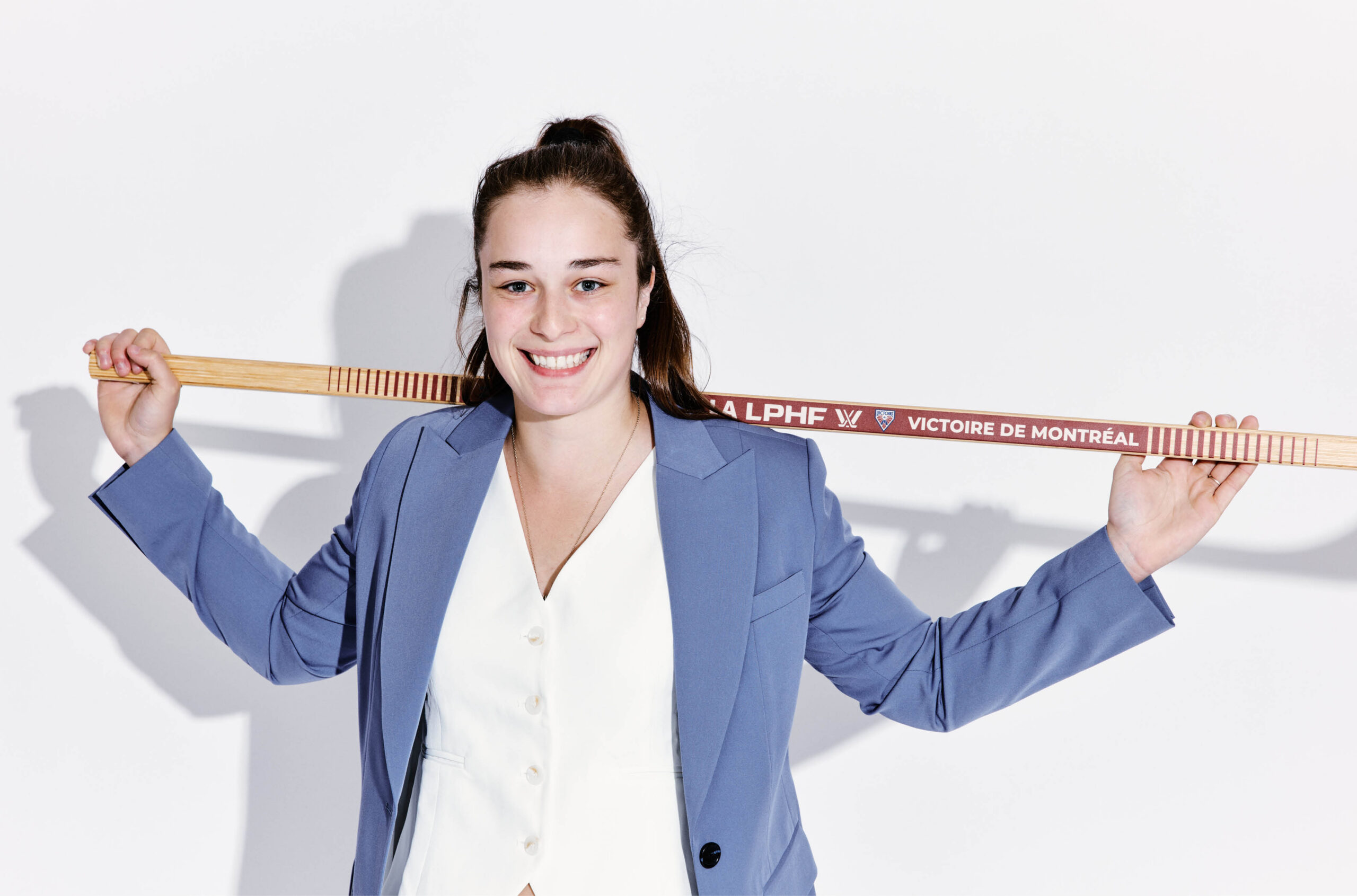
Several recent Canadian university graduates will be hitting the ice when the Professional Women’s Hockey League (PWHL) begins its season in December, determined to prove that they can compete with any player who went to school south of the border.
When these women began their post-secondary educations, the PWHL didn’t exist. Now, the league is expanding from eight to 12 teams, providing opportunities for more players to skate after completing their schooling.
The pay is modest: entry level PWHL players earn just over US$38,000 per season. That’s a far cry from the minimum $850,000 men collect in the National Hockey League. Still, for a league that is only three years old, it’s a start.
Canadian grads face stiff competition from those who honed their skills in the American National Collegiate Athletic Association (NCAA). That includes both native-born Americans and Canadians who went stateside to attend school and hit the rink.
The NCAA is a huge business, with $1.38 billion in revenue, much of it generated from the TV and streaming rights to basketball’s March Madness. This allows teams, including women’s hockey, to provide top-notch facilities and hire the best coaches, nutritionists and physiotherapists.
In Canada, university athletics — known as U Sports — is a more modest enterprise. Nevertheless, two Canadian grads drafted into the PWHL are proud of their accomplishments and say they can go head-to-head against anybody who skated in the U.S.
READ MORE: The evolution of U Sports – University Affairs
“The strength of U Sports is increasing,” says Émilie Lavoie, who played with Concordia University in Montreal. She was selected this year by her hometown PWHL team, the Montréal Victoire, which captured the league championship last spring.
“We are demonstrating that we are just as good as the NCAA,” Ms. Lavoie told University Affairs. “I’m very happy that I stayed in Quebec, both on and off the ice. I wouldn’t have changed a thing. I would do it all over again.”
She points to the outstanding coaches at Concordia. Indeed, the one of the team’s assistant coaches was Caroline Ouellette, a four-time Olympic gold medalist for Canada. She has since joined the Victoire as an assistant coach. Her spouse, American world champion Julie Chu, has been head coach of the Concordia Stingers since 2016.
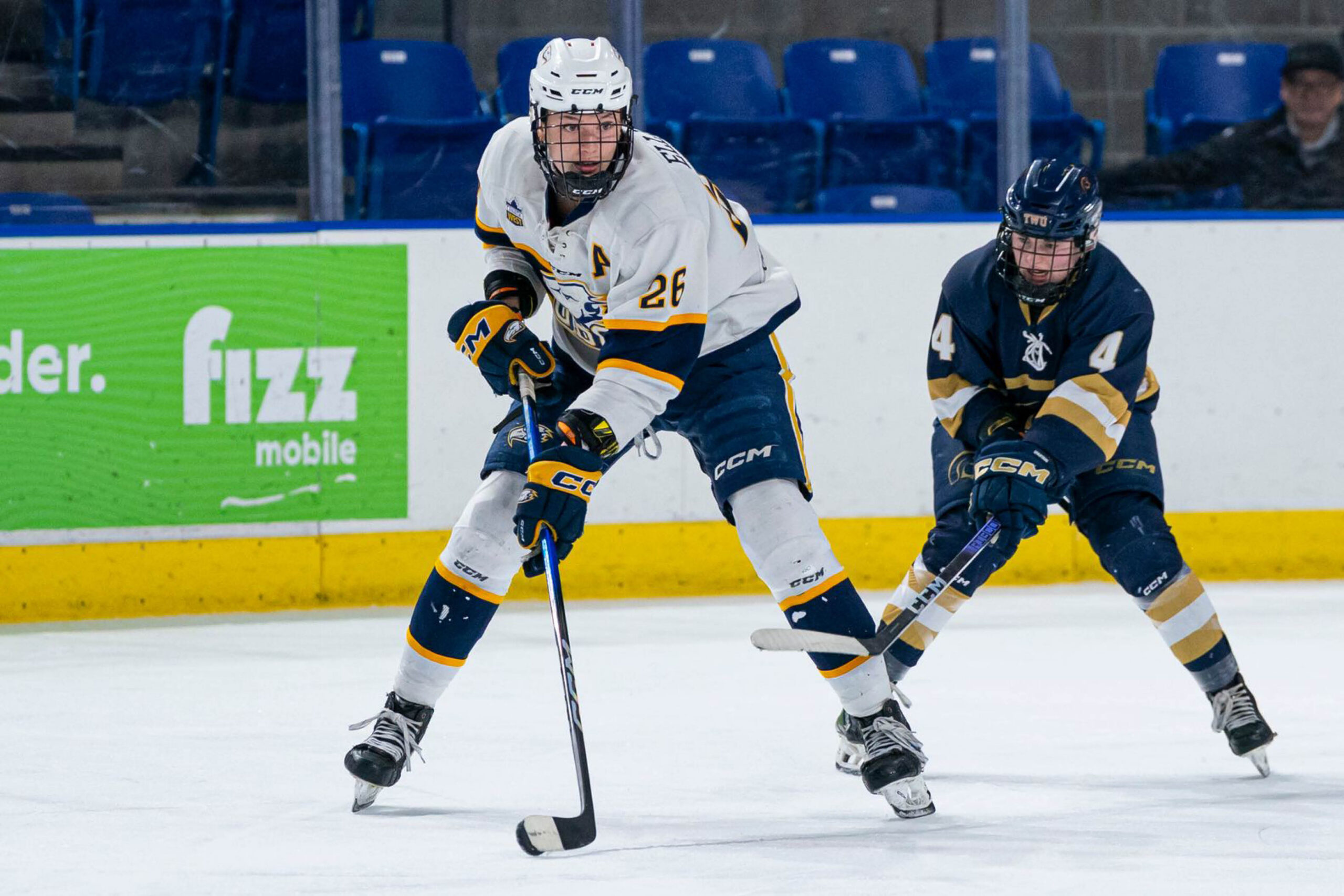
Grace Elliott, a former University of British Columbia Thunderbirds player, is equally determined to prove that U Sports players can hold their own against NCAA grads. “Some people point to me and say, ‘Oh, she played in Canada. That’s not good.’”
She can’t wait for the start of the season and to skate for the Seattle Torrent. “I’m excited to show what I can do. For those who think U Sports isn’t that strong – I hope to prove them wrong.”
Ms. Elliott, who is from White Rock, B.C., grew up going to watch Thunderbirds women’s hockey. For her the choice was easy. “UBC is close to home, the schooling is fantastic and I heard great things about the hockey program.”

U.S. schools draw some Canadian players
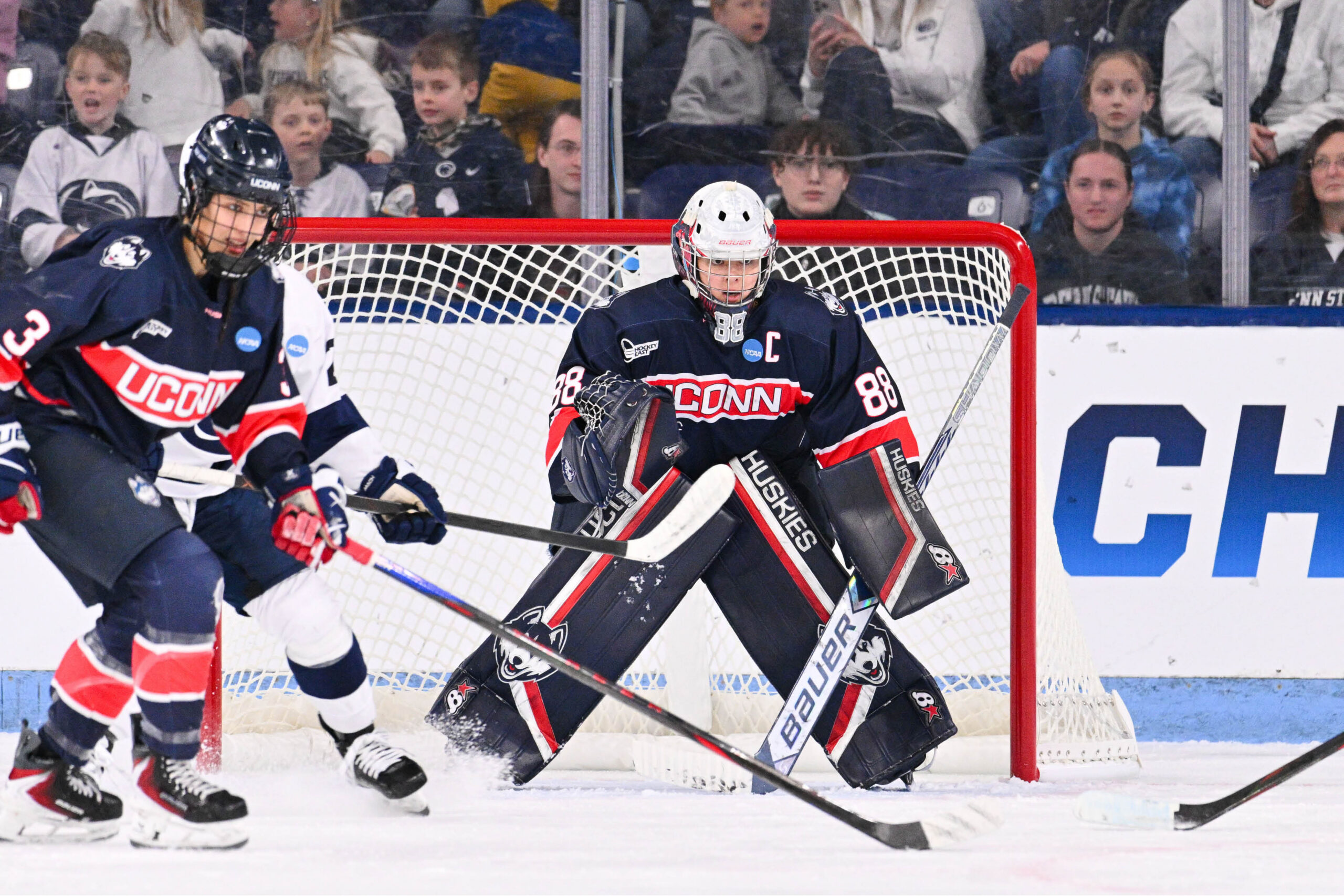
Tia Chan was born in Hamilton, Ont., and decided to attend the University of Connecticut, playing goal for the Huskies. She has been drafted by the expansion team in San Jose, California.
“Excellent academics were my first priority in choosing a school,” Ms. Chan says. “UConn offered access to tutors, mental health support and had a great hockey family. When I visited the campus, I felt like I fit in right away. It was clear that the coaches were there to stay, which was important to me.”
UConn offered Ms. Chan a full scholarship, including tuition and living expenses. “Getting everything paid for definitely helped a lot,” she says.
In Canada, U Sports athletes may see their tuition covered, but these scholarships do not include room and board.
While financial support attracts many Canadians to head south, not every American school offers scholarships. Issy Wunder, from Toronto, chose to attend Princeton University in New Jersey, even though Ivy League colleges don’t cover tuition and board for athletes.
“When I was looking for a school, it was important to find one that combined academics and hockey,” says Ms. Wunder, who has been drafted by Las Vegas. “I love Canada and would have been happy to attend a Canadian university. But Princeton has an outstanding reputation as the number one undergrad school in the U.S.”
Ms. Wunder loved the Princeton campus, but notes that the arena is old and creaky. “While I was at Princeton, the arena turned 100 years old. It was not state-of-the-art and was always pretty cold. The history and atmosphere made up for that.”
All four players agree that when they hang up their skates they will need a second career, unlike NHL players who can accumulate multimillion-dollar nest eggs.
Ms. Chan says preparing for the future was essential, making academics key to choosing a university. “There were a lot of options at UConn, and when I arrived I wasn’t sure what I wanted to study. I ended up taking allied health and then getting a master’s in exercise science.”
Across Canada, more young girls are playing hockey and watching the PWHL. That is fueling interest at the nation’s universities. Université Laval is icing its first women’s hockey squad ever this season.
“The arrival of Rouge et Or will contribute to the growth and profile of women’s hockey in the region and across the province,” says ULaval head coach Pascal Dufresne. “And if it helps pave the way for more homegrown players to reach the PWHL, then we will be able to say that our mission has been accomplished.”



Featured Jobs
- Global Inequalities and Trade - Faculty PositionUniversité Laval
- Director, Human Research Ethics & Strategic AdvisorUniversity of Manitoba
- International Studies - Faculty Position (Arctic Defence and Security)Université Laval
- KAUST Global Fellowship Program - Postdoctoral Fellowship (Call 2027)King Abdullah University of Science and Technology
- Theatre and Film - Assistant Professor Without Review (Performance Practice)The University of British Columbia
More from News
-

The hidden problem of student homelessness
As high rents push more students into precarious housing, it's time to stop romanticizing the 'poor scholar'.
-

Parliamentary committee urges stronger support for research in French
Granting agencies should consider funding targets specifically for French-language projects, the Standing Committee on Science and Research recommends.
-

Remove EDI from research funding decisions, parliamentary committee says
The Standing Committee on Science and Research says ‘discriminatory’ EDI policies are ‘weakening the quality of Canadian research’.
-

Good medicine: new programs train country doctors
Université de Montreal follows Queen’s prescription to heal the shortage of family physicians in rural areas.
More from Students
-

Kids with wealthy grandparents more likely to attend university
High-income grandparents can compensate for low-income parents in higher-ed access, a recent study shows.
-

The paradox of doctoral learning
Completing a PhD doesn’t mark the end of learning, but rather the loss of the illusion that learning ever ends.
-

Ottawa extends successful program to recruit French-speaking international students
Minority communities, universities, benefit from demographic boost of young francophones.
-

Fostering Black brilliance
At two Atlantic Canadian universities, small teams are thinking big to promote the scientific potential of students of African descent.
More from Articles
-

Universities struggle to be heard in Quebec election
In a campaign dominated by the U.S. trade war and the soaring cost of living, universities assert their continued importance.
-
Quebec’s English-language universities embrace new French requirements as fall cohort begins
McGill, Concordia and Bishop’s universities roll out new initiatives to encourage students to learn French on and off campus.
-
Attacks on higher education spread globally, including in liberal democracies, Scholars at Risk report finds
Canada urged to defend values amid erosion of institutional autonomy in the U.S.
-

Grad student visas double since 2025
Policy changes drive sharp rise in permits for international master’s and PhD candidates.


Post a comment
University Affairs moderates all comments according to the following guidelines. If approved, comments generally appear within one business day. We may republish particularly insightful remarks in our print edition or elsewhere.