Kids with wealthy grandparents more likely to attend university
High-income grandparents can compensate for low-income parents in higher-ed access, a recent study shows.


Although research has long shown that parents’ income level affects their children’s access to post-secondary education, a recent study demonstrates that, in Canada, grandparents’ income also plays a role — especially for low-income families.
“In Canadian families where the parents are in the bottom 10 per cent income bracket, if the grandparents also belong to that group in their generation, then their grandchildren’s access rate to post-secondary education is less than 45 per cent — and less than 15 per cent if we only look at bachelor’s degrees,” said Xavier St-Denis, lead author of the study and an associate professor at Institut national de la recherche scientifique (INRS), Centre Urbanisation Culture Société, in Quebec City.
However, if the parents are in the lowest income group, but the grandparents are among the richest 10 per cent of their generation, the picture changes. “In this case, access rates climb to 55 per cent for post-secondary education [overall], and more than 25 per cent for university undergraduate programs,” he said.
By comparison, among children raised in families in the top 10 per cent income bracket, undergraduate program access rates range from 65 to 80 per cent. “These fairly high rates leave little room for grandparents to play much of an additional role,” noted Dr. St-Denis. “For these young people, participation in post-secondary education will hinge on other factors not necessarily connected to social background or family resources, like personal preferences or academic challenges.”
As such, the study illustrates that high-income grandparents can help offset the disadvantage of having low-income parents.
“It further shows that children caught in multigenerational low-income cycles have very little chance of accessing higher education,” explained Solène Lardoux, a professor at Université de Montréal’s department of demography and population sciences, who also contributed to the study.
Grandparenthood in transition: a closer look
It’s no accident that the research team — which also includes INRS doctoral student Natacha Prats and demographer Béatrice Morselli — chose to study grandparents’ influence on grandchildren’s post-secondary education. According to Dr. St-Denis, researchers in several countries have been examining the subject since the 2000s.
“The role of grandparents has changed considerably over the last 30 years in OECD countries,” he explained. “Life expectancy has risen. And the introduction of a public pension system and Registered Retirement Savings Plans has given retirement a new meaning. Basically, grandparenthood has shifted into the retirement years, when many are on a more solid financial footing. Seniors now maintain their financial independence for longer, whereas in the past many would move in with their children.”
Grandparenthood has also changed now that families are having fewer children. “In the past, with four or five children, horizontal ties among siblings and cousins were very strong. These days, with smaller families, other relatives — like grandparents — may be called on to play a greater support role,” explained Mr. St-Denis, who has a particular interest in social mobility.
He notes that the last Canadian studies about grandparents’ influence on access to post-secondary education date back to the 1970s, since Statistics Canada subsequently stopped collecting data on this subject.
Ultimately, data collection resumed, and the research team was able to access tax data as far back as 1982 to obtain a representative 20 per cent sample of the Canadian population. That, combined with 2016 census data, allowed them to reconstruct family ties between grandchildren, parents, and grandparents, even when they didn’t live under the same roof. The study focused on children born between 1999 and 2001.
Various forms of support
Since grandparents’ income levels are shown to influence their grandchildren’s access to post-secondary education, it can be inferred that they provide support, which can take various forms.
“Our study didn’t identify the specific ways grandchildren benefitted from their grandparents’ resources,” explained Dr. St-Denis. “But this support could include investing in a Registered Education Savings Plan (RESP), covering tuition costs, helping with homework, or helping grandchildren navigate the post-secondary education system. Higher income often correlates with higher education, which can shape different approaches to grandparenting.”
To dig deeper into this topic in parallel with the main study, Dr. St-Denis gathered his own data with Ms. Morselli, thanks to funding from the Association des retraitées et retraités de l’éducation et des autres services publics du Québec (AREQ-CSQ).
Among other questions, they asked grandparents whether they contributed to their grandchildren’s RESP. Their 15 per cent sample was representative of the Quebec population. The verdict? “It’s not that common,” said Mr. St-Denis. “Among those in a wealth bracket of under $50,000, it was 10 per cent, and among those in a $1-million-plus wealth bracket, it was 27 per cent.”
But, generally speaking, the wealthier the grandparents, the more they contribute. “Almost half of the grandparents with a net worth of $1 million or more had given at least $250 to their grandchild in the past year,” he said. “But only 12 per cent of those in the under-$50,000 bracket had done so.”
For Dr. St-Denis, these findings provide a greater understanding of the dynamics of social mobility in Canada. “When it comes to developing family-support policies, data on grandparents should really be included to get a more accurate picture of the situation,” he said. “Right now, that’s not happening.”



Featured Jobs
- Movember Institute Discovery Research Program FellowshipsThe University of British Columbia
- Global Inequalities and Trade - Faculty PositionUniversité Laval
- Theatre and Film - Assistant Professor Without Review (Performance Practice)The University of British Columbia
- Psychology - Assistant Professor (Clinical Psychology)Western University
- Director, Human Research Ethics & Strategic AdvisorUniversity of Manitoba
More from News
-

Ottawa won’t restrict student visas from countries with high asylum-claim rates
India will help Canada ‘crack down’ on student program abuses, high commissioner says.
-

Students and seniors under the same roof
Intergenerational living helps with loneliness and the high cost of rent.
-

U Sports alum lace up for PWHL season
Canadian grads eager to show their mettle on women’s pro hockey teams.
-

The hidden problem of student homelessness
As high rents push more students into precarious housing, it's time to stop romanticizing the 'poor scholar'.
More from Students
-

The paradox of doctoral learning
Completing a PhD doesn’t mark the end of learning, but rather the loss of the illusion that learning ever ends.
-

Ottawa extends successful program to recruit French-speaking international students
Minority communities, universities, benefit from demographic boost of young francophones.
-

Fostering Black brilliance
At two Atlantic Canadian universities, small teams are thinking big to promote the scientific potential of students of African descent.
-
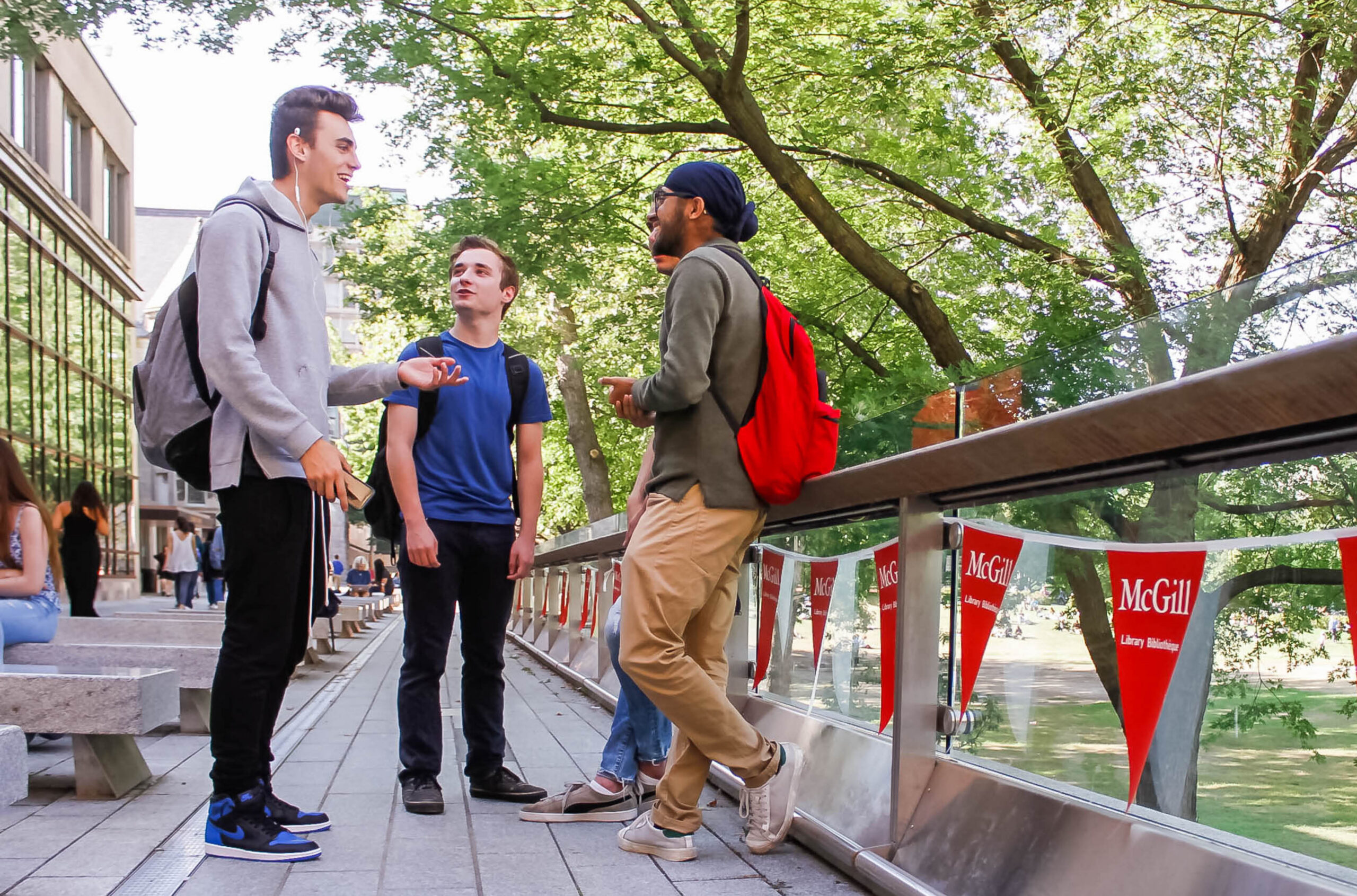
Quebec’s Anglo universities prepare to meet French language targets
Fall 2026 cohort will be the first required to hit 60 per cent proficiency — and falling short means financial penalties.
More from Articles
-

Parliamentary committee urges stronger support for research in French
Granting agencies should consider funding targets specifically for French-language projects, the Standing Committee on Science and Research recommends.
-

Remove EDI from research funding decisions, parliamentary committee says
The Standing Committee on Science and Research says ‘discriminatory’ EDI policies are ‘weakening the quality of Canadian research’.
-

Good medicine: new programs train country doctors
Université de Montreal follows Queen’s prescription to heal the shortage of family physicians in rural areas.
-

Universities struggle to be heard in Quebec election
In a campaign dominated by the U.S. trade war and the soaring cost of living, universities assert their continued importance.


Post a comment
University Affairs moderates all comments according to the following guidelines. If approved, comments generally appear within one business day. We may republish particularly insightful remarks in our print edition or elsewhere.