Ottawa must step up support for scientific research in French, advisory panel says
Government-appointed panel calls for $40M annual fund, improved co-ordination, to capitalize on the scientific, economic and cultural potential of French-language research.

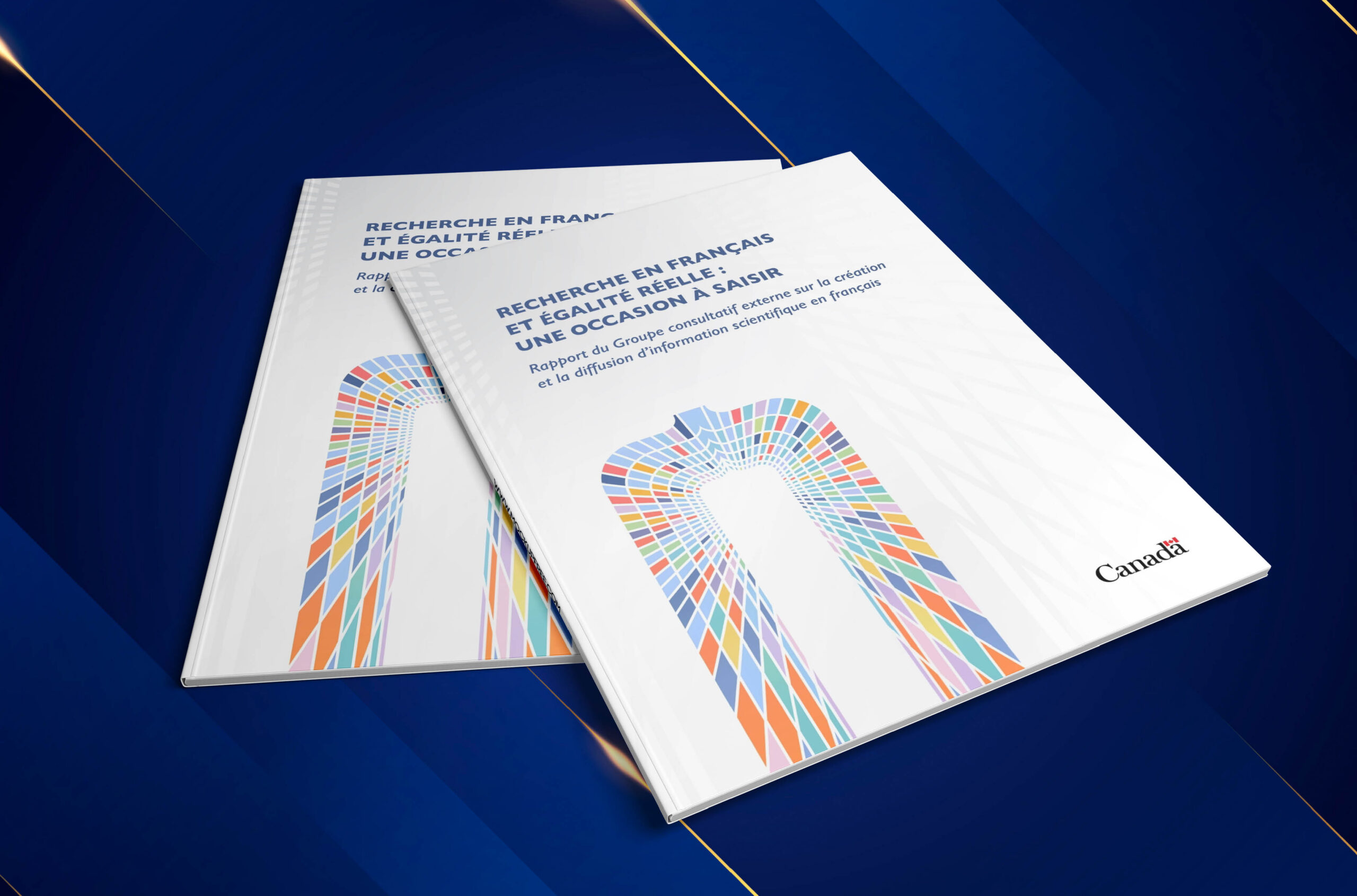
Canadian science can flourish in both official languages, but only with substantial support from the federal government, according to a new report by the External Advisory Panel on the Creation and Dissemination of Scientific Information in French.
The panel, which spent 18 months coming up with recommendations, asserts that, beyond linguistic equality, strengthening research in French could become a strategic driver for Canada’s scientific, economic and cultural future.
A strategic asset
According to Sophie Montreuil, executive director of ACFAS (Association canadienne-française pour l’avancement des sciences), the report gives several excellent reasons to support the pursuit and dissemination of research in French. “The report could have taken a narrow, academic view of research in French,” she said. “But it also presented it as a driver of economic strength and showed its strategic value for the country.”
The report is an appeal to replace the current linguistic equality, which exists primarily on paper, with real equality in practice. Whether this call is heeded remains to be seen. “The government commissioned this report, so it has to follow through, study these recommendations in partnership with relevant bodies such as granting agencies and certain ministries, and then take action,” said Dr. Montreuil.
Martin Normand, president of the Association des collèges et universités de la francophonie canadienne (ACUFC), noted that consultations on the Action Plan for Official Languages 2028–2033 will begin this summer. “We have to act quickly and seek a firm commitment from the federal government to support the report’s recommendations,” he said. “It hasn’t shown much enthusiasm about research in French in the past.”
Vincent Larivière, a professor in the school of library and information sciences at Université de Montréal and a member of the panel, said the report was well received among francophone scholars when it was released in May, but has made few ripples in English-speaking academia. “I haven’t seen any action from anglophone universities or the federal government,” he said. “The rest of Canada needs to understand that research in French is a boon for the country and a strategic asset that reflects our unique national character.”
A comprehensive framework
In its report, the panel issued three major recommendations comprising 12 measures to support the conduct and dissemination of research in French. Recommendations included the creation of a Secretariat for the Coordination of Research in French; a Research in French Support and Promotion Fund worth at least $40 million annually; and a stronger commitment from the Government of Canada.
“These three pillars are well structured and interrelated,” said Dr. Normand. “It’s essential that the federal government understand that all three must be implemented in order to achieve the desired effect.”
The recommendations are rooted in the current, somewhat dismal, state of affairs. “We uncovered significant problems and major inequalities between anglophones and francophones within academic and research ecosystems,” said Dr. Larivière.
The report sheds light on the current federal funding model, which consolidates funding in major research universities — most of which are anglophone — and underfunds fields essential to producing research in French. The privatization of scientific publication also favours anglicization. Dr. Larivière cites the example of Canadian Science Publishing, a not-for-profit organization mandated by former Prime Minister Stephen Harper to take over the scientific journals previously published by the Canada Research Council. Canada Science Publishing no longer publishes French abstracts in its journals.
Other obstacles to the development of French-language research in Canada include the difficulty of obtaining teaching manuals, databases, or software in French, as well as the pressure to publish journal articles in English.
Defining research in French
The panel defines “research in French” as research carried out by francophone researchers who conduct at least part of their activities in that language. For instance, a research team that works and teaches in French, but publishes scientific articles in English, would qualify.
Research on francophone issues would also be included in the definition — a crucial element for Dr. Normand. “If francophone researchers don’t pursue topics of interest to minority francophone communities, who will?” he said. “It probably won’t be anglophone researchers, who want to be published in the major English-language scientific journals.”
The scope of “research in French” also extends to training the next generation of researchers, said Dr. de Moissac. “An effort must be made to support research in French, so that young people will take an interest in it.”
Éric Forgues, executive director of the Canadian Institute for Research on Linguistic Minorities, says the federal government has an essential role to play in francophone communities outside Quebec. “They don’t receive nearly the same support from their provincial governments as the francophone research community in Quebec does,” he said.
When the Standing Committee on Science and Research issued its 2023 report on research and scientific publication in French, the government’s response was disappointing, Dr. Forgues added. “[The government] did little more than take inventory of what it was already doing and confirm it was moving in the right direction,” he said. “We have to make sure this doesn’t happen again.”



Featured Jobs
- Psychology - Assistant Professor (Clinical Psychology)Western University
- International Studies - Faculty Position (Arctic Defence and Security)Université Laval
- Theatre and Film - Assistant Professor Without Review (Performance Practice)The University of British Columbia
- Movember Institute Discovery Research Program FellowshipsThe University of British Columbia
- Global Inequalities and Trade - Faculty PositionUniversité Laval
More from News
-

Canada ‘muddling through’ without national research infrastructure strategy, panel finds
Expert report says fragmented governance and funding threaten Canada's research competitiveness and scientific sovereignty.
-

Ottawa won’t restrict student visas from countries with high asylum-claim rates
India will help Canada ‘crack down’ on student program abuses, high commissioner says.
-

Students and seniors under the same roof
Intergenerational living helps with loneliness and the high cost of rent.
-

U Sports alum lace up for PWHL season
Canadian grads eager to show their mettle on women’s pro hockey teams.
More from Research
-

The Nuisance Variable
Two-thirds of Alzheimer’s patients in Canada are women. Why does research still treat them as an afterthought?
-

How serendipity built a cross-disciplinary career
Taking research positions out of economic necessity allowed me to gather a broad set of skills and knowledge.
-

Science in French? Bien sûr!
As English dominates the publication landscape, support for French-language research is a strategic investment in the quality, equity and the future of knowledge.
-

From doctoral student to entrepreneur
Resources abound to help you turn your PhD research into a business startup.
More from Articles
-

The hidden problem of student homelessness
As high rents push more students into precarious housing, it's time to stop romanticizing the 'poor scholar'.
-

Parliamentary committee urges stronger support for research in French
Granting agencies should consider funding targets specifically for French-language projects, the Standing Committee on Science and Research recommends.
-

Remove EDI from research funding decisions, parliamentary committee says
The Standing Committee on Science and Research says ‘discriminatory’ EDI policies are ‘weakening the quality of Canadian research’.
-

Good medicine: new programs train country doctors
Université de Montreal follows Queen’s prescription to heal the shortage of family physicians in rural areas.


Post a comment
University Affairs moderates all comments according to the following guidelines. If approved, comments generally appear within one business day. We may republish particularly insightful remarks in our print edition or elsewhere.