Introducing the Leading Life Sciences Podcast
This new series will discuss/debate leading life science topics with featured guests.

We’re starting something new.
We address a lot of very important topics in scientific entrepreneurship, career development and academia at The Black Hole. All of our posts follow a very similar formula: calling attention to a common, but rarely talked-about problem, a defined discussion of misalignments between what the system is solving for today and what we should be solving for instead, and a proposal of well thought-out and practical solutions. In fact, we differentiate ourselves from the pack by offering the latter – which is something Dave and I take a lot of pride in.
A common thread that in all of The Black Hole’s articles is our focus on people: they are the core of any successful venture, and programs should be structured in ways that elevate and value the individual. Whether institutions choose to take our advice or not, it feels good knowing that we are offering viable alternatives that always put scientists first. Nevertheless, people are complicated and we often struggle to explore in 500 words all of the nuances and conflicting opinions governing our current systems in science. It is sometimes challenging to put voice to all the different perspectives or play proper devil’s advocate to popular positions (although we’ve often tried). By comparison, unstructured conversation can go beyond defining the problem and offering a solution; the two formats are complementary because context is important.
Enter the Leading Life Sciences Podcast. A new format talk radio series where Damien Wilpitz (founder/CEO of EDC and guest writer for The Black Hole) and I (Jonathan Thon) discuss/debate leading life science topics with featured guests. We float between serious and fun, but strive to add context to the topics we feature here at the Black Hole. We’re putting together our topic list for Season 1 – so if there are subjects you’d like us to discuss or want to be a guest on our podcast, let us know below. Episode 1 will feature David Kent, founder of The Black Hole and group leader at the University of Cambridge in the Cambridge Stem Cell Institute). Tune in!


Featured Jobs
- International Studies - Faculty Position (Arctic Defence and Security)Université Laval
- Director, Human Research Ethics & Strategic AdvisorUniversity of Manitoba
- KAUST Global Fellowship Program - Postdoctoral Fellowship (Call 2027)King Abdullah University of Science and Technology
- Theatre and Film - Assistant Professor Without Review (Performance Practice)The University of British Columbia
- Global Inequalities and Trade - Faculty PositionUniversité Laval
More from Opinion
-

Faculty well-being in the age of GenAI
When every student has an AI assistant, the writing teacher's job becomes both harder and more essential.
-

Committee’s EDI recommendations are based on flawed logic
Excellence must be sufficiently rigorous and inclusive to identify talent wherever it exists.
-
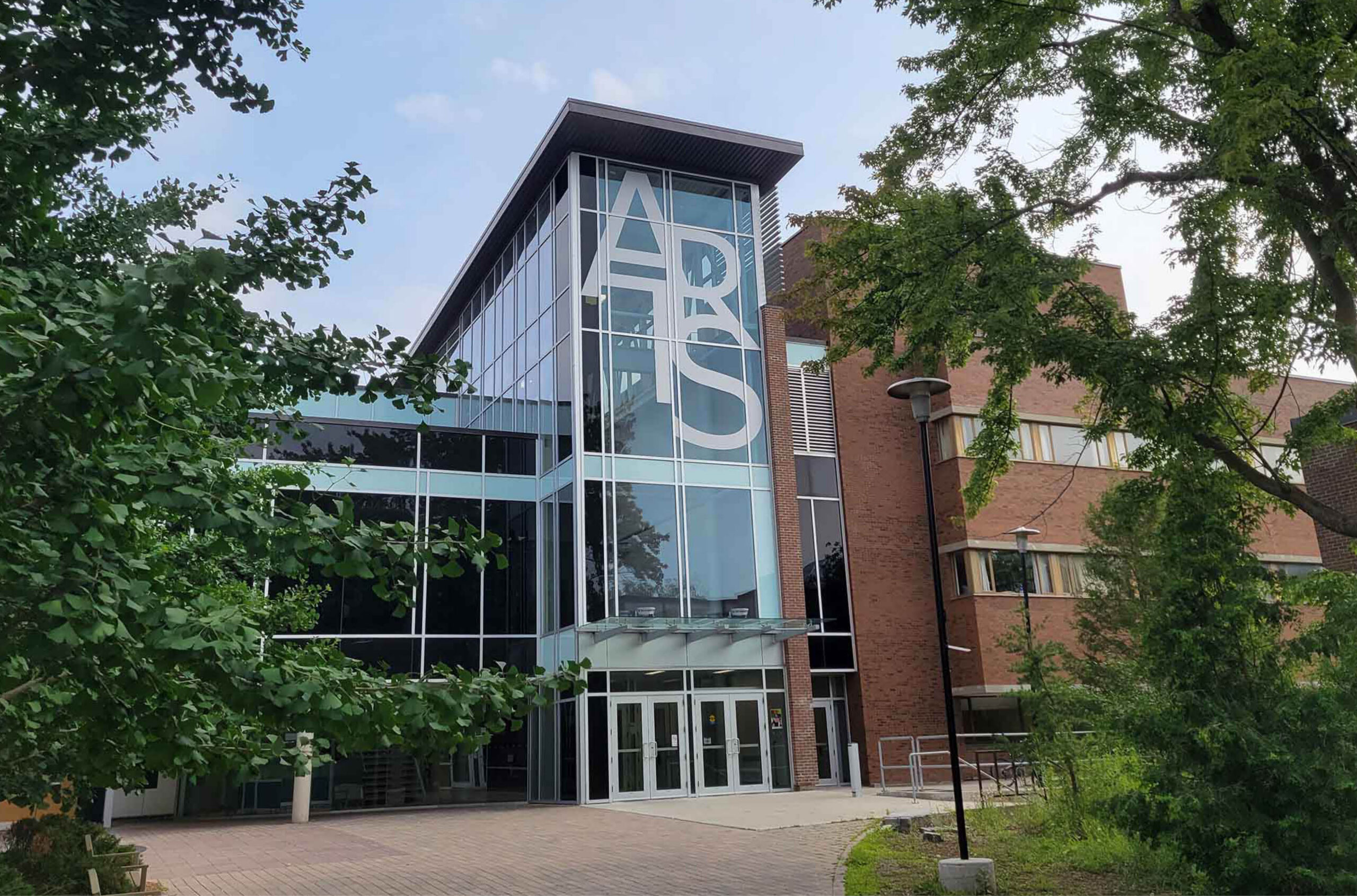
Building resilience in Arts through interdisciplinary collaborations
In a technology-enabled future, Arts faculties have an opportunity to demonstrate their relevance by making collaboration across disciplines easier and more visible.
-

Science in French? Bien sûr!
As English dominates the publication landscape, support for French-language research is a strategic investment in the quality, equity and the future of knowledge.
More from Lab
-

Building a lab: 6 months of triumphs and trials
As head of a lab, you're the one-man band responsible for everything from marketing to finance to product development.
-

A call for widespread adoption of universal MTAs
The current process for material transfer agreements involves way too much paperwork and puts unnecessary stress on both researchers and technology transfer offices.
-

The purpose of branding in science
Branding is the exercise of summarizing an organization’s culture to attract a particular type of employee, collaborator or funder.
-

Incentive structures are needed to ensure scientific progress
We must identify and resolve the gaps in our current scientific training, and revisit and refine the incentive structures we’ve created around our scientists.
More from The Black Hole
-

How to start a company from scratch
Establishing and leading a startup is hard, but it is also an opportunity to do something creative, fun and unique.
-

Yes to more evaluation, but a bigger yes to more action
A recent report on research culture shows that evaluation is key, but stops short of practical solutions to core problems.
-

The art of grant writing: write, rewrite and write again
And don't forget the detailed budgeting and a looming submission deadline.
-

Breaking EDI barriers in science
Clear metrics are needed to evaluate the success of initiatives to remove inequities in the research enterprise.

Post a comment
University Affairs moderates all comments according to the following guidelines. If approved, comments generally appear within one business day. We may republish particularly insightful remarks in our print edition or elsewhere.
1 Comments
I’d like to be a guest on your podcast. I research the temperament trait of Sensory Processing Sensitivity (SPS).
As you know, temperament is the biological basis of personality. SPS is a temperament trait that makes individuals more sensitive to their environment, both for positive and negative. It is characterized by deep cognitive processing, low thresholds to sensory stimulation, and high empathy and emotionalism. I have investigated neural correlates of the trait, primarily with respect to emotion.
I’d be happy to give a presentation on Sensory Processing Sensitivity based on your vision for the podcast.
Warm regards,
Jadzia Jagiellowicz