The paradox of doctoral learning
Completing a PhD doesn’t mark the end of learning, but rather the loss of the illusion that learning ever ends.

As a little boy, I accepted the conventional wisdom surrounding the doctorate. A PhD, I imagined, represented the summit of intellectual achievement. Those who possessed it seemed to belong to a rarefied class of people who had somehow arrived at the furthest shore of knowledge. That perception was reinforced by the authority that universities attach to the title “Doctor.” To a child peering into the adult world, it can appear less like a stage in learning than its completion.
Yet the belief also inspired me. Through many detours and interruptions, scholarship remained tied to a distant aspiration: perhaps one day I, too, would arrive at that summit. Part of this fascination was nurtured by books. I read authors’ biographies with ritual curiosity, captivated by the academic credentials that accompanied their names. The profiles of writers such as J.M. Coetzee, Abdulrazak Gurnah, and Chaim Potok suggested that intellectual inquiry and creative expression can coexist within the same life.
Years later, after completing my doctorate, I discovered something profoundly counterintuitive. The degree did not diminish my hunger for knowledge; it intensified it. Instead of feeling intellectually complete, I became increasingly aware of the vastness of what I did not know. Every insight opened onto further questions, every area of competence revealed entire territories of uncertainty beyond it. What deep study changes is not simply the quantity of knowledge one possesses but one’s awareness of complexity. It was then that a line attributed to Percy Bysshe Shelley gave me a force I had never fully appreciated before: “The more we study, the more we discover our ignorance.”
Enlarging the horizon of inquiry
During my doctoral studies, I became increasingly aware that different intellectual traditions often illuminate reality diversely, while leaving other dimensions in shadow. For someone inclined towards symmetry, coherence and certainty, these competing perspectives were initially unsettling. Yet they ultimately taught me a different lesson: knowledge is not a finished structure but an ongoing dialogue between partial perspectives. In the work of sociologist Pierre Bourdieu, I encountered a way to bridge these divides — viewing intellectual work not as a battle to win, but as a dynamic space where competing perspectives coexist.
Along the way, I occasionally encountered assumptions about what counted as a legitimate research question. Such moments reinforced a lesson that has stayed with me: the advancement of knowledge depends not only on answering existing questions but also expanding the range of questions we are willing to ask. Scholarship, at its best, enlarges the horizon of inquiry rather than narrowing it.
Cultivating intellectual humility
As children, we often imagine knowledge as a map whose blank spaces gradually disappear. We assume that experts simply possess larger completed maps than the rest of us. But mature scholarship reveals something else entirely. Every answer generates new questions, and every area of expertise exposes further complexity. This may explain why some of history’s greatest thinkers, such as Socrates and Isaac Newton, expressed themselves with striking humility. Their humility is not a gesture of false modesty; it instead arises from direct confrontations with the limits of human understanding. The doctoral training taught me that genuine expertise often begins with intellectual humility. The deeper the inquiry, the greater the awareness of uncertainty. This is the opposite of the current digital culture in which visibility is frequently treated as proof of authority.
Ironically, the doctorate itself embodies this paradox. A PhD is not awarded because someone has mastered an entire discipline, but because they have made a modest contribution to a highly specialized area of inquiry. In making that contribution, however, one gains a deeper awareness of everything that remains unresolved, contested, or unknown. The novice often experiences knowledge as certainty; the scholar increasingly experiences it as inquiry. The more one understands the complexity of evidence, language and interpretation, the more difficult simplistic certainty becomes.
A sustained practice of inquiry and expression
Looking back now, I have come to believe that education is less about accumulating certainty than cultivating curiosity, humility, and a willingness to revise one’s assumptions when challenged by new information. Intellectual life is not the acquisition of final answers but a sustained practice of inquiry and expression. The completion of a doctorate does not mark the end of learning. If anything, it marks the loss of the illusion that learning ever ends. That is perhaps the true paradox of doctoral learning: the credential suggests mastery, while wisdom reveals vastness.
Yet I do not dismiss the childhood dreams that first set me on this path. As a little boy, I imagined that a PhD represented the furthest shore of knowledge. I now know that no such shore exists. But hidden within that misunderstanding is something enduringly true: a longing for knowledge, expression and intellectual discovery that no degree could ever finally exhaust.
What new horizons of learning do you aspire to explore?

Featured Jobs
- Global Inequalities and Trade - Faculty PositionUniversité Laval
- International Studies - Faculty Position (Arctic Defence and Security)Université Laval
- Theatre and Film - Assistant Professor Without Review (Performance Practice)The University of British Columbia
- Movember Institute Discovery Research Program FellowshipsThe University of British Columbia
- Director, Human Research Ethics & Strategic AdvisorUniversity of Manitoba
More from Career Advice
-

How serendipity built a cross-disciplinary career
Taking research positions out of economic necessity allowed me to gather a broad set of skills and knowledge.
-

From doctoral student to entrepreneur
Resources abound to help you turn your PhD research into a business startup.
-
Internationalizing Truth And Reconciliation through multilingual storytelling
Faculty share stories in their home and heart languages in the University of the Fraser Valley’s Leq'áleq’el Video Series.
-

Show it clearly: illustrating a report for your community partners
Part II: How to design figures that tell your story.
More from Students
-

Students and seniors under the same roof
Intergenerational living helps with loneliness and the high cost of rent.
-

U Sports alum lace up for PWHL season
Canadian grads eager to show their mettle on women’s pro hockey teams.
-

The hidden problem of student homelessness
As high rents push more students into precarious housing, it's time to stop romanticizing the 'poor scholar'.
-

Kids with wealthy grandparents more likely to attend university
High-income grandparents can compensate for low-income parents in higher-ed access, a recent study shows.
More from Graduate Matters
-
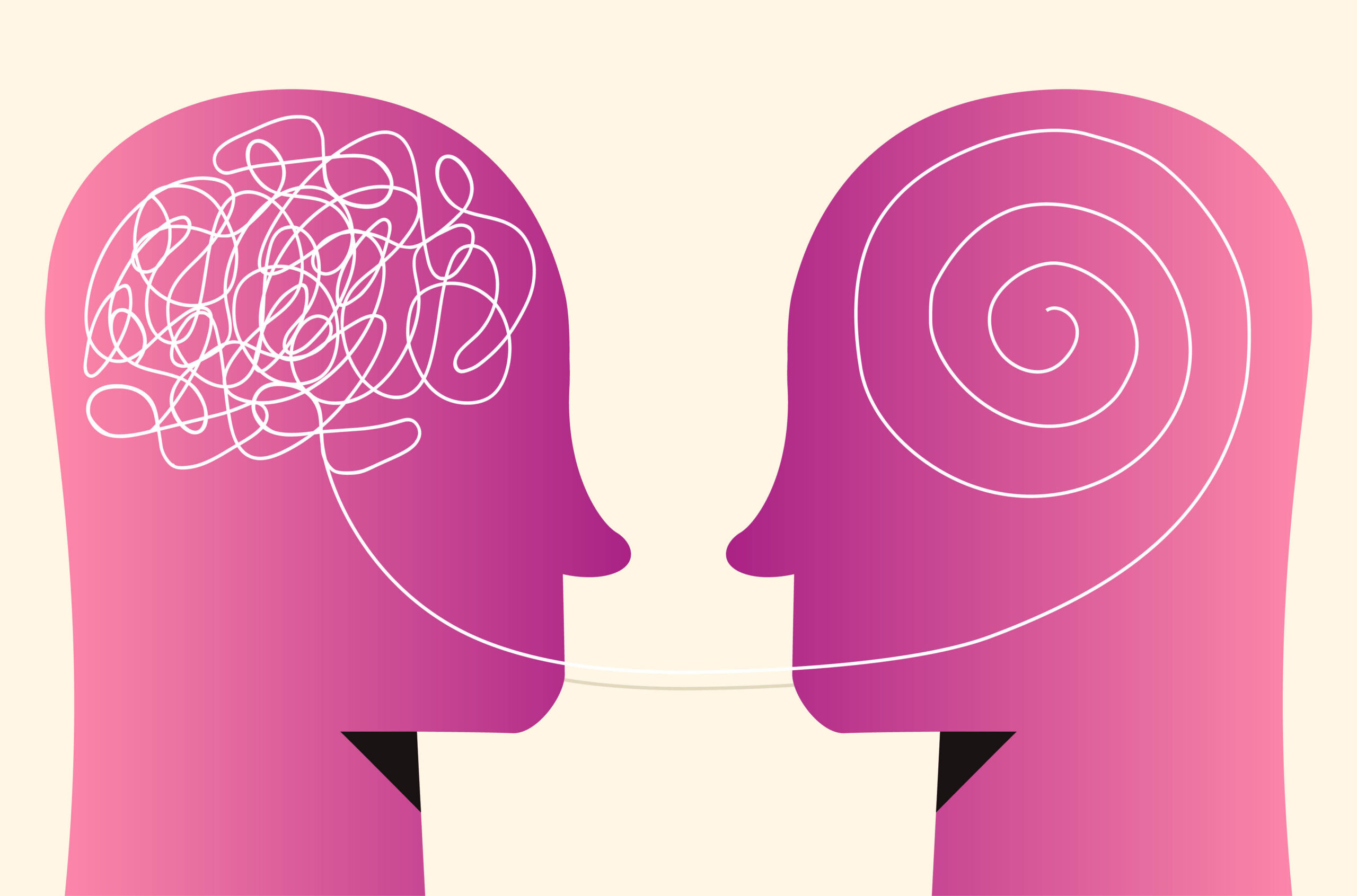
PhD studies: perception vs reality
How do I tell my friends and family about what I really do as a doctoral student?
-

Heading to France for your master’s?
Quebec’s Bourse Frontenac could help fund your graduate studies.
-

Thriving after your PhD
Evidence and advice from postdocs about finding your footing in the working world.
-
Studying in French as an anglophone? Mais oui!
Pursuing graduate studies in a second language is daunting but, ultimately, rewarding.


Post a comment
University Affairs moderates all comments according to the following guidelines. If approved, comments generally appear within one business day. We may republish particularly insightful remarks in our print edition or elsewhere.
3 Comments
This is a masterpiece. Its modes of presentation is world class . The author’s style of writing made reading easy and enjoyable. Mostly importantly, its postulation that learning is never-ending is encouraging and challenging. With this piece, the writer has cultivated a fan that will read his write-ups and opinion on a myriad of subjects, always.
So true. Well said.
This is such an eloquent description of scientific inquiry. It explains why, for instance, our understanding of COVID kept changing during the pandemic. I wish some of our policy-makers had a better understanding of this process.