Canada ‘muddling through’ without national research infrastructure strategy, panel finds
Expert report says fragmented governance and funding threaten Canada's research competitiveness and scientific sovereignty.

Despite decades of investment in world-class facilities, Canada lacks a co-ordinated strategy to manage and fund its national-scale research infrastructure, putting global competitiveness and scientific sovereignty at risk, according to a new expert panel report.
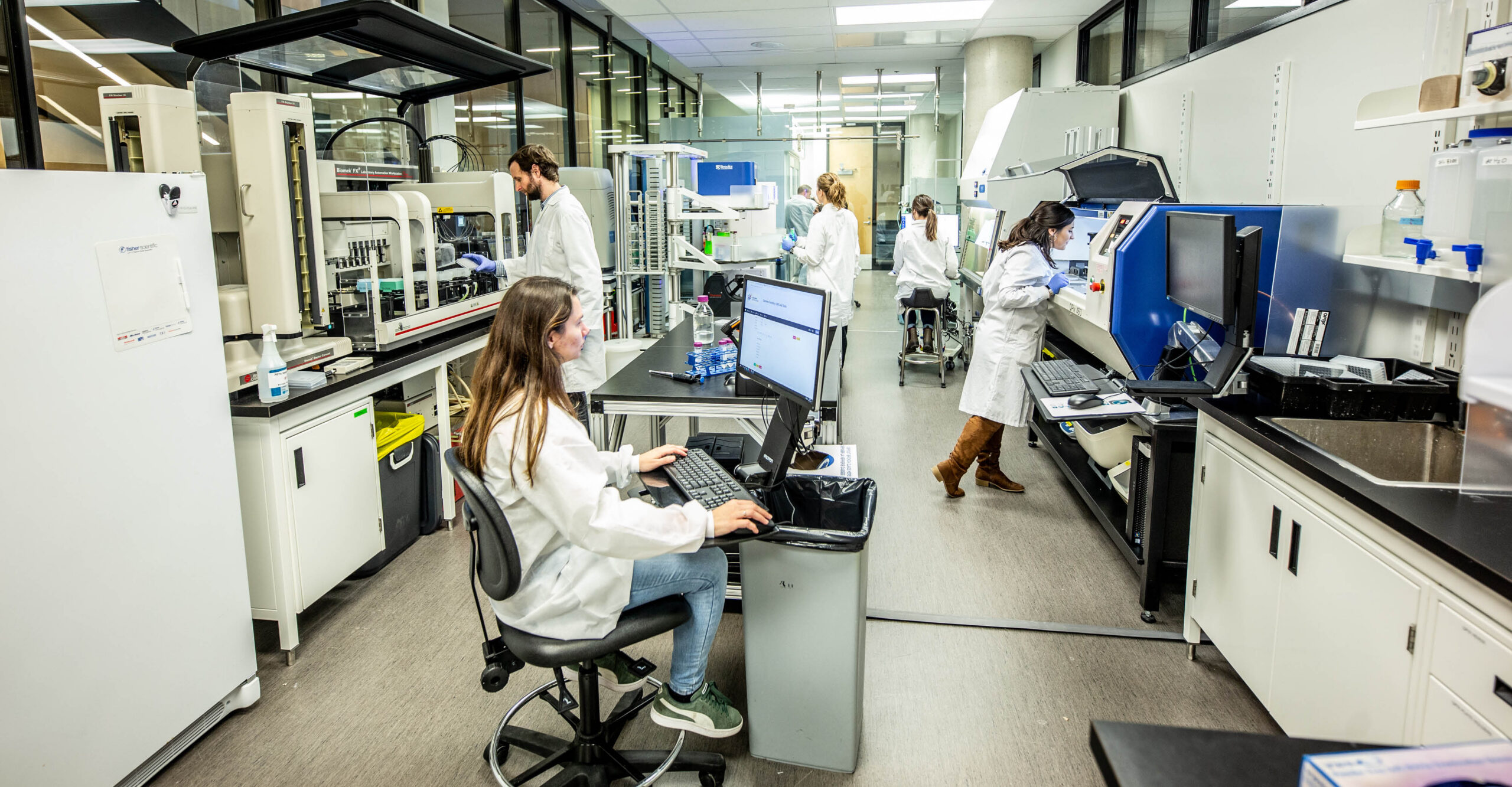
The Council of Canadian Academies (CCA) warns that Canada’s piecemeal approach to research infrastructure has left the country with a collection of internationally respected facilities that support scientific discovery and innovation but are not managed as part of a coherent system.
The panel, which was commissioned by Innovation, Science and Economic Development Canada (ISED), argues that these facilities should be treated as strategic national assets, particularly as Canada faces growing geopolitical and economic uncertainty and rapid technological change driven by artificial intelligence.
“If we don’t get this done better, we will fall behind at a time when Canada wants to move ahead, compete and reset its alliances and success on the world stage.”
Janet King, the panel chair, says that incremental investments in research infrastructure won’t be enough for the “suite of challenges” Canada is facing. “The world is moving quickly — and Canada is moving quickly,” says Dr. King. “If we don’t get this done better, we will fall behind at a time when Canada wants to move ahead, compete and reset its alliances and success on the world stage.”
Researchers have been “let down” by the country’s fragmented approach, the panel says, warning that Canada cannot continue “muddling through” without undermining its competitiveness and resilience.
Enhancing Canada’s National Scale Infrastructure is the latest of several reports published over the last few decades that have called for improvements to the national research ecosystem. According to the panel, there is broad consensus within the research community that substantive changes are needed.
A fragmented system
At the heart of the problem is the absence of a national framework for planning, developing and supporting national-scale research infrastructure, the panel found.
Responsibility is spread across federal and provincial governments, universities and other organizations, such as non-governmental organizations or private partners, with distinct mandates and priorities.
The predominant governance model for national-scale research infrastructure hosted by universities is contractor-owned and contractor-operated, but governance arrangements differ between facilities.
For example, TRIUMF, Canada’s particle accelerator laboratory hosted at the University of British Columbia, is an incorporated charity owned by a consortium of 21 universities whose board oversees the laboratory, while universities exercise collective ownership through its membership structure. The Canada Research Data Centre Network, in contrast, is hosted at McMaster University, operates as a consortium of 46 institutions, but is not incorporated and shares governance between member institutions and Statistics Canada.
Other infrastructure, such as the National Microbiology Laboratory, is government-owned and operated, while some research facilities are government-owned but operated by a private-sector organization, such as the Canadian Nuclear Laboratories at Chalk River.
Governance is further complicated by the range of leadership structures, which can combine working groups, advisory councils, oversight committees and multi-sectoral boards.



The panel also emphasizes that, despite the expectation that provinces and territories contribute to national infrastructure to achieve national goals, there is poor co-ordination with the federal government, which is compounded by election-cycle leadership changes at both levels.
Fractured funding systems
Canada’s national research facilities rely on a patchwork of funding from federal departments and agencies, including the National Research Council, and federally funded intermediaries such as the Canada Foundation for Innovation (CFI). Other contributors include provincial and territorial governments, universities and host institutions, Indigenous governments and organizations, philanthropic organizations and philanthropic or private partners.
Most facilities depend on multiple funding sources, but with “generally little or no sustained coordination” among funders. That can leave facilities without reliable funding to hire and retain core staff, maintain buildings and equipment, support international and interdisciplinary collaborations, cover institutional overhead and liability costs, or decommission infrastructure at the end of its lifespan. Host institutions and other partners are often left to cover the shortfalls, making long-term planning difficult and undermining the facilities’ ability to operate as national research assets.
“Researchers may not have access to facilities that have a clear future beyond a few years,” says Dr. King. She notes that one of the most common complaints from researchers is the inefficiency of applying to separate entities for grants, access to facilities, or for a piece of equipment. “What if a great idea is there and you can’t bring it together because there are too many pieces operating on different timelines?”
The panel also identifies matching-fund requirements as another factor contributing to the fragmented system. Federal funding for national-scale research infrastructure, such as funding through CFI, often requires contributions from other sources, typically provincial or territorial governments, with host institutions and other partners covering remaining costs.
But the panel warns that these requirements “can be at odds with the expectation that these infrastructures function as national strategic assets focused on national priorities.” They can also make it difficult for smaller jurisdictions to contribute to national research facilities and put undue pressure on smaller institutions.
Canada is also missing a dedicated pathway for scientists to gain funding for, and access to international research infrastructure, the reports says. Such a portal would streamline the current complicated and time-consuming application processes.
Toward a national strategy
The CCA says a portfolio-based approach — where national-scale research infrastructure is managed collectively as a portfolio of assets, rather than individually distinct projects — would allow governments to co-ordinate investments and provide consistent and predictable funding over the project’s lifecycle.
The panel says that establishing a “specialized governance body,” such as a capstone, would be one way to co-ordinate research funding and facilities and to guide policy.
In 2024, the Advisory Panel on the Federal Research Support System led by Frédéric Bouchard called for the formation of a new agency that would coordinate funding across institutions, deliver Tri-Council programming, improve strategy planning and respond quickly to new research priorities.
Drawing on those recommendations, the federal government’s 2024 budget announced the establishment of a “capstone research funding organization” to “advance internationally collaborative, multi-disciplinary and mission-driven research” and enhance national co-ordination. The agency has not yet been formed; however, the government reiterated its commitment in Budget 2025 and ISED’s 2026-27 departmental plan.
The CCA notes that, despite “three decades of solicited and independent advice” reinforcing the need for a national policy framework and governance body, there is a lack “of willingness to set priorities, make deliberate choices, and sustain them over time.”
Dr. King points out that the current federal government under Prime Minister Mark Carney is seeking to leverage science for a number of national priorities, such as artificial intelligence and defence.
“If you’re not sure about your scientific foundation, that the ecosystem you’re drawing on is healthy… when you’re drawing on it, you may be missing the support you need.”



Featured Jobs
- International Studies - Faculty Position (Arctic Defence and Security)Université Laval
- Movember Institute Discovery Research Program FellowshipsThe University of British Columbia
- Toldo Chair in Christian StudiesAssumption University
- Director, Human Research Ethics & Strategic AdvisorUniversity of Manitoba
- Psychology - Assistant Professor (Clinical Psychology)Western University
More from News
-

Ottawa won’t restrict student visas from countries with high asylum-claim rates
India will help Canada ‘crack down’ on student program abuses, high commissioner says.
-

Students and seniors under the same roof
Intergenerational living helps with loneliness and the high cost of rent.
-

U Sports alum lace up for PWHL season
Canadian grads eager to show their mettle on women’s pro hockey teams.
-

The hidden problem of student homelessness
As high rents push more students into precarious housing, it's time to stop romanticizing the 'poor scholar'.
More from Research
-

The Nuisance Variable
Two-thirds of Alzheimer’s patients in Canada are women. Why does research still treat them as an afterthought?
-

How serendipity built a cross-disciplinary career
Taking research positions out of economic necessity allowed me to gather a broad set of skills and knowledge.
-

Science in French? Bien sûr!
As English dominates the publication landscape, support for French-language research is a strategic investment in the quality, equity and the future of knowledge.
-

From doctoral student to entrepreneur
Resources abound to help you turn your PhD research into a business startup.
More from Articles
-

Parliamentary committee urges stronger support for research in French
Granting agencies should consider funding targets specifically for French-language projects, the Standing Committee on Science and Research recommends.
-

Remove EDI from research funding decisions, parliamentary committee says
The Standing Committee on Science and Research says ‘discriminatory’ EDI policies are ‘weakening the quality of Canadian research’.
-

Good medicine: new programs train country doctors
Université de Montreal follows Queen’s prescription to heal the shortage of family physicians in rural areas.
-

Universities struggle to be heard in Quebec election
In a campaign dominated by the U.S. trade war and the soaring cost of living, universities assert their continued importance.

Post a comment
University Affairs moderates all comments according to the following guidelines. If approved, comments generally appear within one business day. We may republish particularly insightful remarks in our print edition or elsewhere.