Aligning curricula with the workforce: the case in favour
Matthew McKean and Valerie Walker argue that students aren't choosing between learning and work, so why should universities?


This article is part of our Prof v. Prof summer debate series, where academics take opposing viewpoints on hot topics in higher education. Read all the articles from the series here.
The debate over whether universities should align with workforce needs is flawed, because it starts from a false choice. Students aren’t choosing between personal and intellectual growth on the one hand, and preparing for careers on the other. They expect both.
The real question is what alignment means. It doesn’t mean tailoring curricula to today’s job postings or letting employers dictate what students learn. It does mean helping students understand how the knowledge and skills they develop at university can be applied in a changing world of work.
That wasn’t always the case. For generations, the division of responsibilities was more straightforward. Universities provided broad intellectual foundations, while employers helped graduates continue learning and developing over the course of their careers.
That arrangement no longer holds. Work has become more dynamic and career paths less predictable. Students need more help navigating the transition from education to employment, and a lifetime of adaptation.
Artificial intelligence is reshaping jobs. New technologies are changing how work is organized. Demographic and geopolitical pressures are altering labour-market demands. The World Economic Forum’s 2025 Future of Jobs Report estimates that early 40 per cent of workers’ core skills will need to change within the next five years. Increasingly, graduates can expect to move between jobs, sectors and even entirely new fields over the course of their careers.
The faster work changes, the more valuable a university education becomes when students understand how to apply what they know in unfamiliar situations.
This is also when the traditional debate over whether universities should align their curricula with workforce needs really begins to look outdated. Few jobs will remain unchanged over the course of a graduate’s working life. Alignment isn’t about preparing students for a specific job. It’s about helping them apply what they learn across changing roles, sectors and contexts.
The irony is that the more unpredictable work becomes, the more valuable the traditional strengths of a university education become. Critical thinking, curiosity, communication, judgment, and the ability to keep learning are not alternatives to career preparation. They’re what make lifelong career preparation possible.
The university leaders we talk to in the Business + Higher Education Roundtable (BHER) membership often express the same ambition: to graduate students who leave university confident not only in what they know but in where it can take them. And for good reason. A student may leave university with strong analytical skills, intellectual curiosity, and a deep understanding of their field. But knowledge alone doesn’t help students understand how to navigate an increasingly complex labour market. Too many graduates still find themselves asking a simple question: “What now?”
Read also: Aligning curricula with the workforce: the case against
Graduates who are underprepared for the transition from school to work are more likely to experience periods of uncertainty, underemployment, or delayed entry into careers that match their capabilities. The consequences extend beyond individual graduates. As BHER and the financial institution RBC argued in A Smarter Path, Canada’s prosperity depends on ensuring that learning translates into productive work.
Some of the most promising innovations in higher education — from work-integrated learning and applied research to community partnerships and interdisciplinary projects — are doing exactly that. Statistics Canadafound in 2018 that bachelor’s graduates who participated in work-integrated learning were more likely to land work in their field; less likely to be overqualified; and earned more three years after graduation than their counterparts who didn’t.
Why? Because work-integrated learning helps students apply what they learn in real-world settings, build professional networks, explore potential career pathways, and better understand how their education connects to opportunities beyond campus. This is what meaningful alignment looks like: not replacing academic learning, but giving students more opportunities to apply it.
Many universities are already doing this in places. But the challenge now is to make those connections more deliberate, more consistent, more visible and accessible to every student; not something they encounter only if they choose the right program, find the right professor, or happen into the right opportunity.
We hear this in conversations across the country and through our own national work-integrated learning programs. A political science student wants to understand how public institutions work, but also wonders what careers might exist beyond government. An English major loves literature, but is uncertain how to explain the value of their degree to prospective employers. An engineering student wants technical expertise, but also opportunities to develop leadership and communication skills.
What strikes us is that these students aren’t asking universities to abandon their academic mission. They’re asking for help connecting that mission to their futures. That aspiration is not a corruption of higher education’s purpose. It’s central to it.
It’s why the debate has been framed incorrectly all along. Universities shouldn’t choose between intellectual growth and career preparation. Students don’t. Nor is alignment about reshaping universities around the labour market. It’s about making sure every student has the chance to connect what they learn to the futures they hope to build, deliberately and by design.



Featured Jobs
- Director, Human Research Ethics & Strategic AdvisorUniversity of Manitoba
- Global Inequalities and Trade - Faculty PositionUniversité Laval
- Theatre and Film - Assistant Professor Without Review (Performance Practice)The University of British Columbia
- Psychology - Assistant Professor (Clinical Psychology)Western University
- International Studies - Faculty Position (Arctic Defence and Security)Université Laval
More from Opinion
-

Faculty well-being in the age of GenAI
When every student has an AI assistant, the writing teacher's job becomes both harder and more essential.
-
Committee’s EDI recommendations are based on flawed logic
Excellence must be sufficiently rigorous and inclusive to identify talent wherever it exists.
-
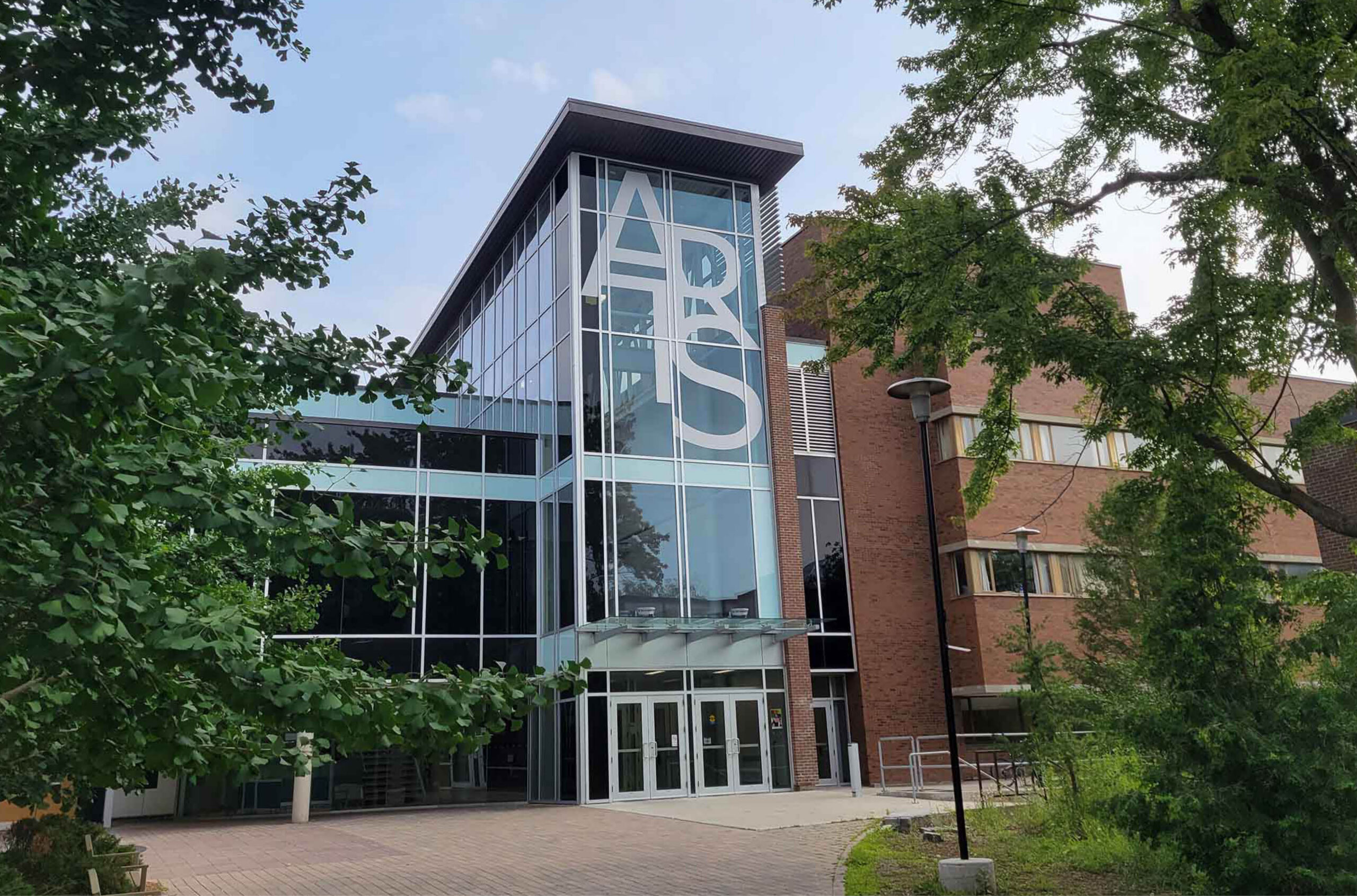
Building resilience in Arts through interdisciplinary collaborations
In a technology-enabled future, Arts faculties have an opportunity to demonstrate their relevance by making collaboration across disciplines easier and more visible.
-

Science in French? Bien sûr!
As English dominates the publication landscape, support for French-language research is a strategic investment in the quality, equity and the future of knowledge.
More from Teaching
-

Good medicine: new programs train country doctors
Université de Montreal follows Queen’s prescription to heal the shortage of family physicians in rural areas.
-

Level Up Learning
Amélie Vallières investigates how story-driven video games can support learning and build identity.
-

Aligning curricula with the workforce: the case against
Mazen Guirguis argues that the university should return to its Socratic roots.
-

Why some people succeed at university without being the ‘top students’
How to help students navigate the unwritten rules of the academy.
More from Prof v. Prof
-

Mandatory retirement: the case against
Joe Norris argues that forcing academics to retire is a form of systemic violence.
-

Mandatory retirement: the case in favour
Jamie Paris argues that guaranteed employment for life skews the age balance of the professorate while enabling the exploitation of early- and mid-career scholars.
-

AI in universities: the case in favour
Joël Blit argues integrating AI into curricula and pedagogy can make universities more human, not less.
-

AI in universities: the case against
Ping Lam Ip and Andrea DeKeseredy argue generative artificial intelligence has no place in higher education.


Post a comment
University Affairs moderates all comments according to the following guidelines. If approved, comments generally appear within one business day. We may republish particularly insightful remarks in our print edition or elsewhere.
2 Comments
Note: I just posted a comment in support of Guirguis’ argument.
I do not see this article by McKean and Walker as an argument for “aligning curricula with the workforce” – it is not a true argument against the alternate opinion by posted by Guirguis. This article openly acknowledges that university education “doesn’t mean tailoring curricula to today’s job postings or letting employers dictate what students learn” and that “Alignment isn’t about preparing students for a specific job”. The argument here really seems to be that students need some help in understanding the use of their learning in the workplace. Yes, some experience there could be useful – either from the university, or from Summer jobs.
Well said!